Checkout integration
Server-side STK Push initiation with controlled order states and useful customer feedback.
M-Pesa e-commerce integration
Production-minded Daraja integrations for Kenyan stores: STK Push initiation, callback validation, transaction records, reconciliation, customer status and safe recovery when networks or callbacks fail.
Customers get a clear checkout experience while operations and finance work from verified payment state rather than manual messages.
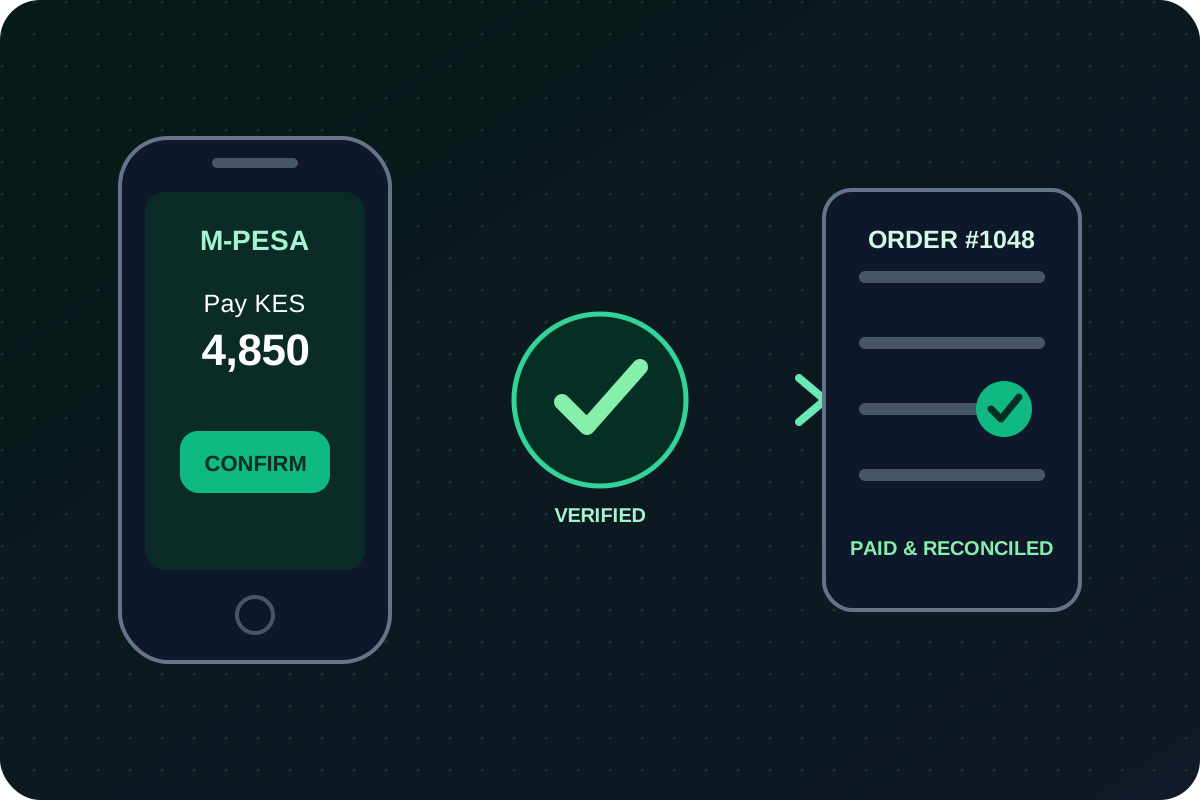
Where time and orders leak
What is delivered
Server-side STK Push initiation with controlled order states and useful customer feedback.
Validated callbacks, idempotent updates and a query/recovery path for delayed or ambiguous results.
Transaction references, timestamps, amounts and order relationships stored for operations and finance.
Secret handling, minimal logs, error alerts, rate controls and a production runbook.
Delivery process
Confirm Daraja access, shortcode type, callback domain, store platform and the intended payment lifecycle.
Define pending, paid, failed, cancelled, timed-out and review states before writing integration code.
Test authentication, requests, callbacks, duplicate events, amount mismatches and unavailable dependencies.
Move credentials securely, monitor live transactions and reconcile the first production batch.
The final architecture depends on API access, data quality, ownership and operational return.
Relevant proof
Review a complex commerce build involving a large regulated catalogue, operational integrations and local-market requirements.
Read the case studyYour merchant setup and the Daraja product available to it determine the integration path. The technical audit confirms the shortcode, credentials and business process before implementation.
The order remains in a non-paid state until verified. The integration can query transaction status, alert staff and provide a review path rather than marking an order paid from the browser alone.
Yes, through an appropriate payment app, custom extension or middleware service. The best option depends on checkout constraints, ownership, expected volume and maintenance requirements.
No. The PIN is entered on Safaricom-controlled prompts and must never be collected or stored by the store integration.
Share the systems involved and the manual work that slows the team down. You will receive a structured brief for technical review.