Integration audit
Review apps, webhooks, manual work, data ownership, subscription cost and the operational bottleneck.
Shopify automation consultant
Connect Shopify orders, products, inventory and customers with the operational systems behind the store: ERP, POS, 3PL, CRM, accounting, support and reporting.
Store events become controlled operational actions, with fewer stock mistakes, faster fulfilment and a traceable record when something needs attention.
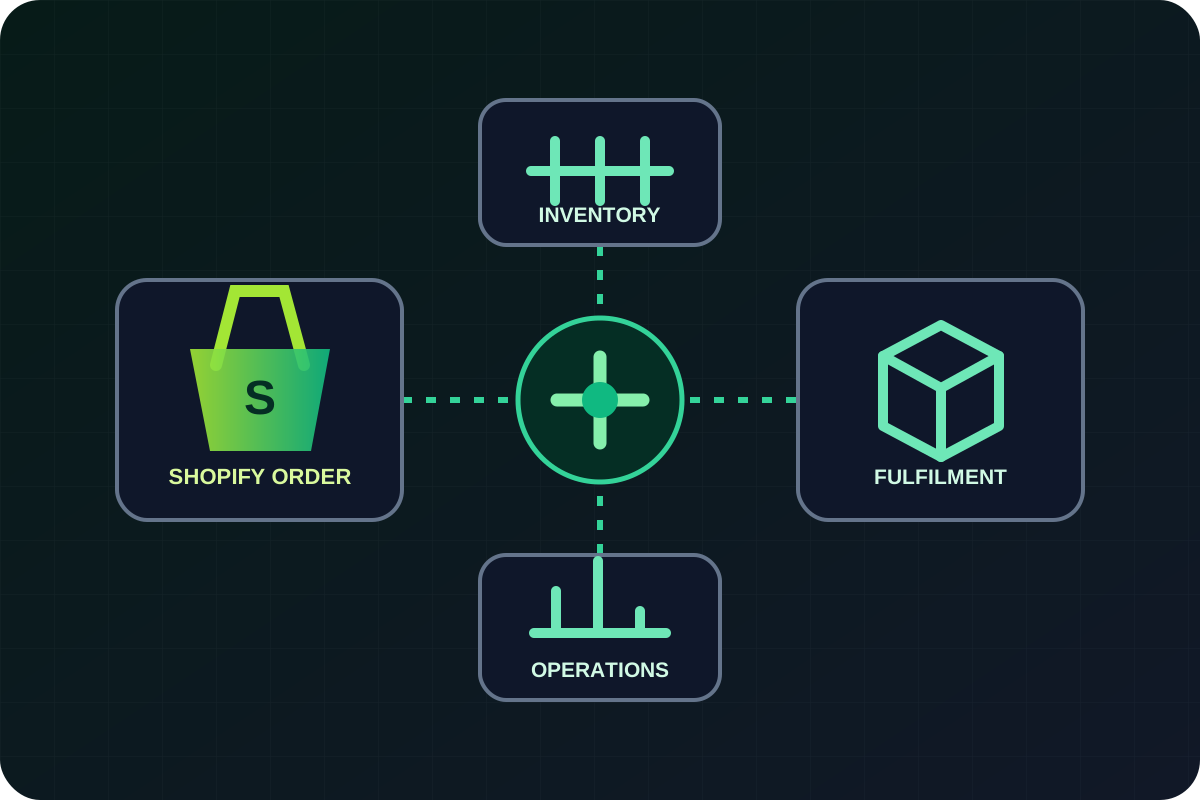
Where time and orders leak
What is delivered
Review apps, webhooks, manual work, data ownership, subscription cost and the operational bottleneck.
Reliable handling for orders, fulfilments, refunds, inventory, products and customers.
ERP, POS, WMS/3PL, CRM, accounting, helpdesk and reporting integrations through APIs or middleware.
Version-aware API use, logging, retries, documentation and a clear plan for platform changes.
Delivery process
Follow a real order from checkout through payment, stock, fulfilment, support, finance and reporting.
Assign ownership for products, inventory, customers, fulfilment and financial records.
Use authenticated APIs and webhooks with stable identifiers, deduplication and staged rollout.
Track handling time, failed syncs, fulfilment delay, cancellations and staff intervention.
The final architecture depends on API access, data quality, ownership and operational return.
Relevant proof
Browse commerce and integration projects that demonstrate catalogue, workflow and platform engineering.
Read the case studyBoth are possible, but this service is focused on operations behind an existing or planned store: data flow, integrations, reliability and measurable process improvement.
Usually, if the system exposes a usable API, database interface or supported export/import process. Discovery confirms authentication, data quality, limits and ownership before committing to the design.
Use a reputable app when it satisfies the workflow, security, ownership and cost requirements. Custom middleware is justified when business rules, scale or systems are not served reliably by an app.
Yes, after defining the inventory system of record, reservation rules, update latency, bundles, returns and the behaviour required when a location or integration is unavailable.
Share the systems involved and the manual work that slows the team down. You will receive a structured brief for technical review.