Operations map
A documented view of triggers, systems, hand-offs, failure points and the highest-return automation opportunities.
E-commerce automation in Kenya
I design reliable e-commerce automations for Kenyan retailers: orders, M-Pesa status, inventory, fulfilment, CRM, customer messages and reporting moving through one monitored system.
Your team handles exceptions and growth decisions instead of re-entering orders, checking payment screenshots or reconciling disconnected spreadsheets.
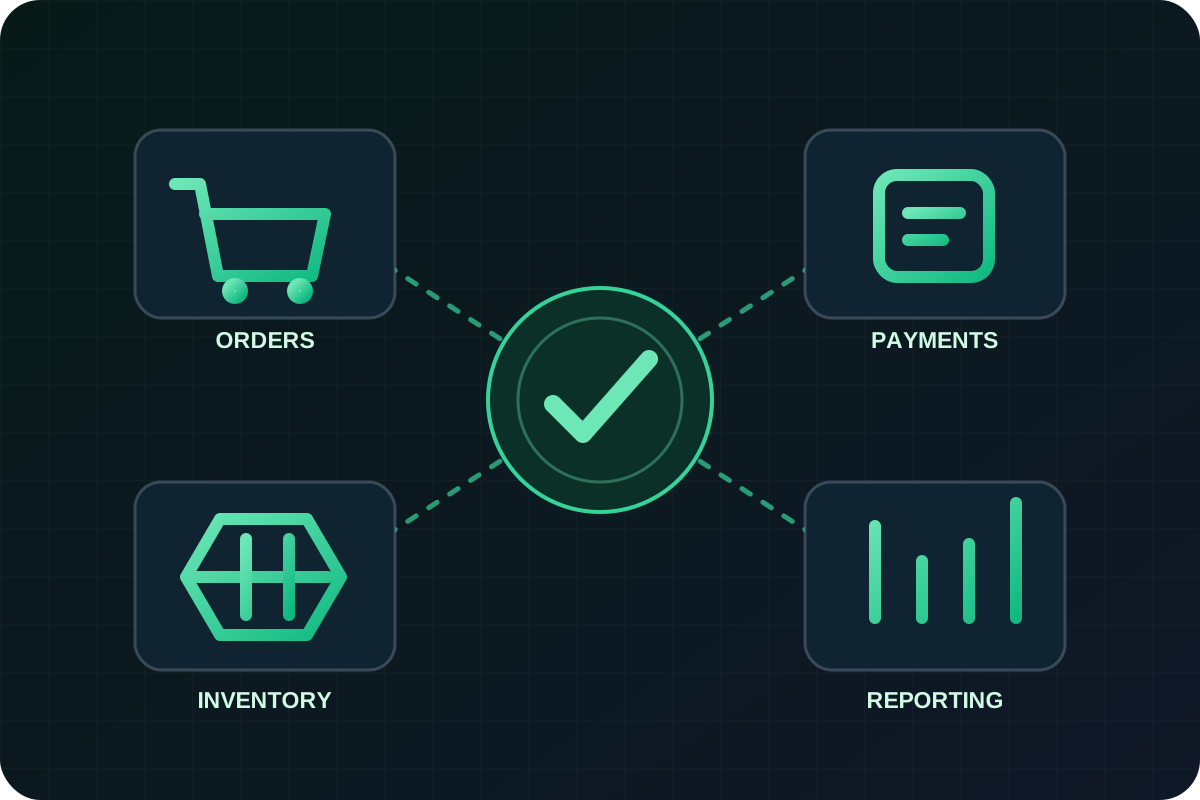
Where time and orders leak
What is delivered
A documented view of triggers, systems, hand-offs, failure points and the highest-return automation opportunities.
API and n8n workflows with validation, idempotency, retries, alerts and an explicit manual recovery path.
Store, M-Pesa or card payments, POS, inventory, delivery, CRM, accounting and reporting connected where the business case is sound.
Runbooks, credentials guidance, workflow ownership, staff training and post-launch observation.
Delivery process
Measure order volume, handling time, error rates and the cost of each manual hand-off.
Choose the system of record and define events, data contracts, exceptions and security boundaries.
Implement against sandbox data, test duplicate and delayed events, and prove recovery paths.
Release in controlled stages, monitor outcomes and automate the next constraint only when justified.
The final architecture depends on API access, data quality, ownership and operational return.
Relevant proof
See how self-hosted orchestration, API integrations and operational visibility are approached in a production system.
Read the case studyStart with a repetitive, high-volume hand-off that has a clear cost: payment confirmation, stock synchronization, order routing or status communication. The audit ranks candidates by hours saved, error reduction, implementation risk and payback.
Yes. The work can integrate an existing Shopify, WooCommerce or custom store. A rebuild is recommended only when the current platform blocks reliable integration or conversion.
Yes. Reliable automation has an exception queue, alerts, logs and a documented manual recovery path. It should not hide failed orders or lock the team out.
A contained workflow commonly takes two to four weeks after access and requirements are ready. Multi-system order, inventory and finance programmes are delivered in stages and may take four to eight weeks or more.
Share the systems involved and the manual work that slows the team down. You will receive a structured brief for technical review.