1. Planning and Architecture
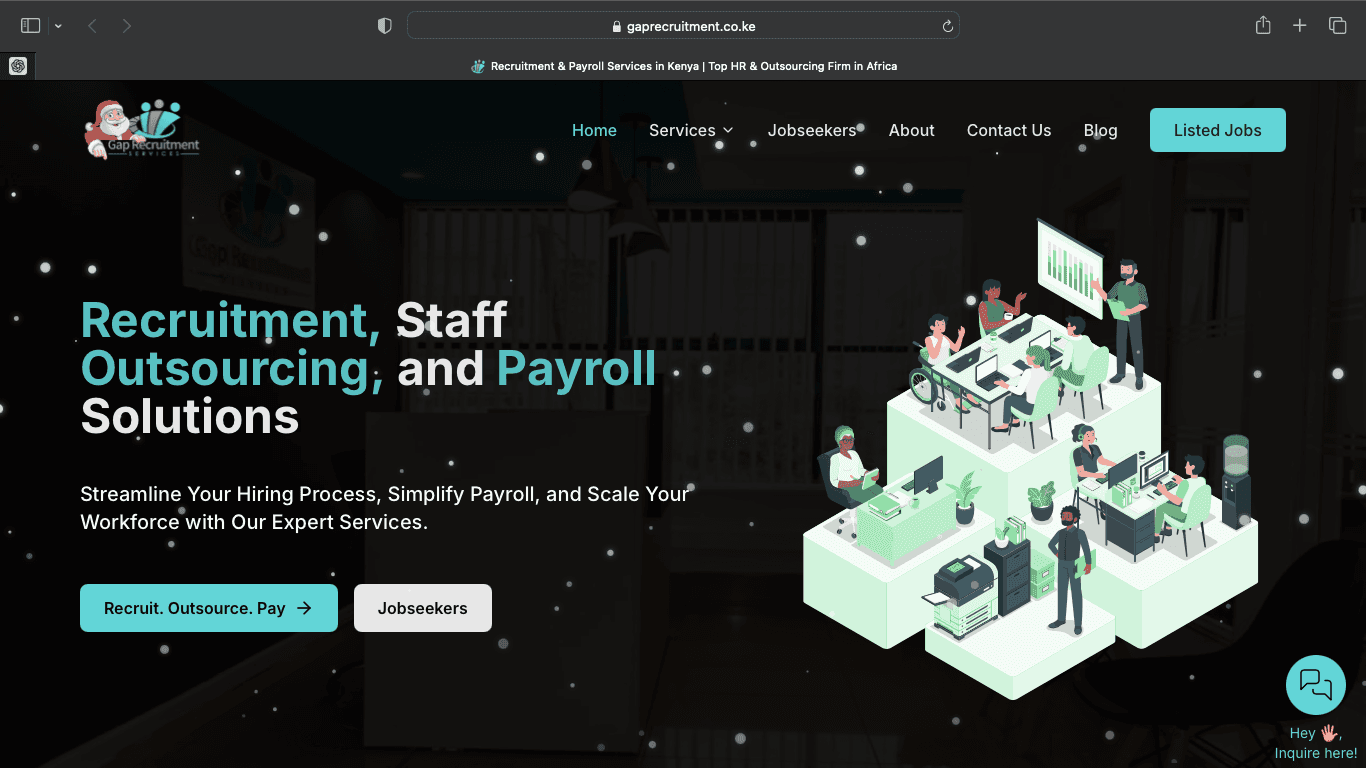
The project began with strategic planning to ensure scalability and modularity. A headless architecture was adopted, using Strapi for content management and Next.js for rendering. The priorities were performance, security, CMS independence, and strong CI/CD deployment.
2. Front End Development
Next.js was implemented with Static Site Generation and Incremental Static Regeneration. TailwindCSS provided responsive, consistent styling. Features included mobile first design, click to WhatsApp chat, optimized images, and accessibility support.
3. Backend and Content Management
Strapi CMS allowed recruiters to create, edit, and publish content without developer intervention. APIs connected Strapi to Next.js securely, with ISR ensuring new content appeared live instantly. The result was fast, dynamic content delivery with complete editorial control.
4. ATS and Job Board Integration
An Applicant Tracking System was added to allow job seekers to browse and apply for positions. Applications were securely stored and synchronized with backend systems, reducing manual HR tasks.
5. Security and Compliance
Security was prioritized across all layers:
- Content Security Policy configured through NGINX headers to prevent XSS and injection attacks by allowing only trusted content sources.
- HSTS enforced strict HTTPS only connections to block protocol downgrade.
- CORS restricted data access to trusted domains only.
- Cloudflare Turnstile protected the contact form.
- NGINX hardening with rate limiting, TLS 1.3, hidden headers, and automatic SSL renewal.
- Environment protection with secrets in env files and DO firewall rules.
6. Deployment and DevOps
The deployment pipeline was automated via GitHub Actions and hosted on DigitalOcean running Ubuntu Linux. Git ensured version control, while Bash scripts handled pulling updates, rebuilding, and restarting PM2 managed processes. NGINX acted as a reverse proxy and PM2 was used for process management.